
PV safety
Safety does not end on installation day.
Changes, maintenance, evidence and emergency readiness matter throughout a PV system's life.
Start with the current situation
PV systems can contain multiple sources and circuits. Turning off one device does not automatically prove that every conductor is de-energised. Emergency information should be specific to the actual system, current after changes and available to the people who may need it.
Do not open equipment, disconnect PV connectors, climb onto a roof or test live conductors based on website guidance. Keep people clear of an apparent electrical danger and seek appropriate emergency or competent professional assistance.
Look beyond a single component
Components, environment, change history and visible concern.
Appropriate protection, competent work and tracked action.
Current records, planned review and emergency information.
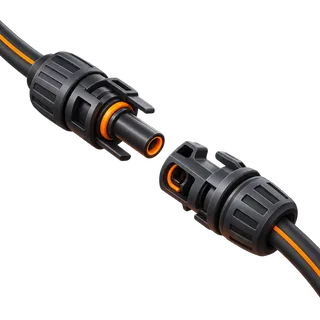
DC connections & cabling
Compatibility, routing, protection and workmanship need context and competent review.
Shutdown & isolation
Know what a control is intended to isolate and what may remain energised.
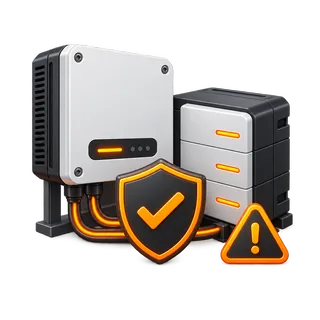
Battery & inverter context
Location, protection, condition, changes and manufacturer information all matter.
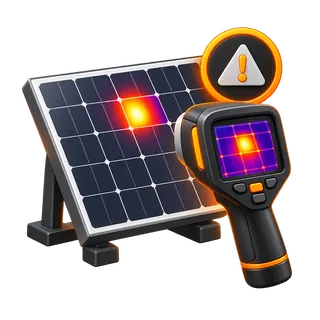
Maintenance & thermography
Inspection scope, operating conditions and unresolved findings should be recorded.
Owner handover
Useful handover connects records, contacts, system operation and emergency information.
Documentation & evidence
A supplied document is not automatically complete, current or verified for the whole system.
An ongoing safety cycle
- 01Assess
- 02Document
- 03Mitigate
- 04Verify
- 05Monitor
- 06Maintain
- 07Reassess
Monitoring means a future risk-management practice. This site does not claim live sensors, weather feeds, AI alerts or remote surveillance.
Connections and cabling
Public information can help an owner understand why connector compatibility, cable routing, mechanical support and recorded repairs are relevant questions. It cannot safely confirm workmanship from a checkbox or casual visual inspection.
Shutdown and isolation
A site-specific plan should explain the intended shutdown sequence, responsible people and remaining hazards. General diagrams are educational; they are not operating instructions for an unknown installation.
Battery and inverter context
Equipment type alone does not establish risk. Installation environment, protective measures, manufacturer instructions, known faults and later alterations require appropriate review.
Maintenance and thermography
Maintenance records should identify who worked, what was inspected, the conditions and scope, what was found and which actions remain open. A thermal image needs competent interpretation and does not represent the whole system by itself.
Owner handover
Owners benefit from knowing the main equipment, responsible contacts, shutdown information, drawings and certificates or authorisations that apply to the system. A signed handover confirms an event; it does not automatically verify every underlying fact.
Documentation and evidence
Useful evidence identifies its issuer, date, scope, applicable system version and unresolved limitations. A CoC, test record, municipal/distributor authorisation, maintenance report and insurer request are different records serving different purposes.
Ask who did what, when and for which part of the system. What record supports it?